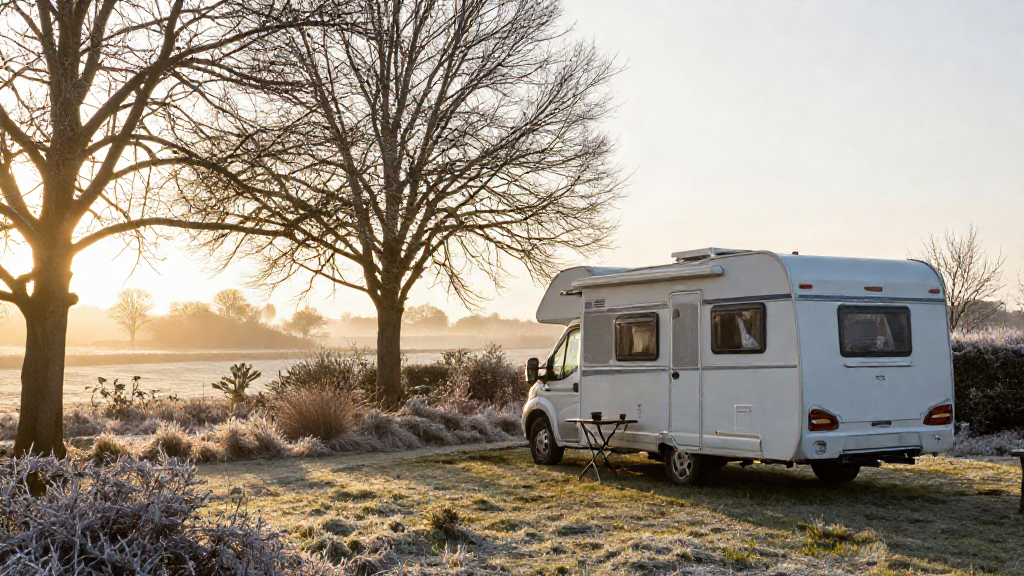
Winter motorhome touring in the UK has a reputation problem. Most people picture grey skies, closed sites and long dark drives, then book a ferry to Spain instead. That's a shame, because the colder months quietly hand you the best pitches of the year: quiet campsites, frosty sunrises, half-price coastal views and no queue for the showers. You just need to know which sites actually stay open, and how to get to them comfortably.
Why UK winter touring is worth the effort
Once the summer crowds go home, the touring calendar opens up. Popular honeypots that are rammed in August sit half empty in January, and plenty of parks drop their nightly rates for the quiet season. Frost on the awning rail is no reason to stay at home.
The trade-off is that some sites shut, some facilities close down for the winter, and the driving gets darker earlier. All of that is manageable with a bit of planning before you leave, rather than during a rain-sodden arrival at dusk.
What to check before you book an all-year pitch
An 'open all year' badge on a website does not always mean everything is running. It can mean the hardstanding pitches are open while the toilet block, washing-up area or on-site shop is shut until spring. Ring or email before you book and ask three questions: are the pitch electrics live, is the shower and toilet block open, and is the water tap at the pitch frost-protected.
Also check the access road. Winter is when you find out whether a narrow lane has a passing place big enough for you, or whether a sloping entrance turns slick in the wet. If you are arriving after dark, ask for a pitch near the entrance so you are not threading a 7-metre van between trees in the pitch black.
Ten all-year UK campsites for winter touring
Rather than send you to specific gates that may change their season next year, here are ten areas where year-round touring parks are well established. Check each park's winter opening and facilities directly before you commit, and use a campsite search filtered to 'open all year' to build your shortlist.
1. The South West coast (Cornwall and Devon). Winter is when the coastal paths are empty and the sea views come cheap. Many parks along the north Cornish and Devon coasts stay open for hardstanding touring pitches to catch the winter trade.
2. The Somerset Levels and Mendips. Flat, sheltered and easy to reach, with all-year parks that make a gentle first winter trip if you are still learning how your van behaves in the cold.
3. The Cotswolds. Honey-stone villages, quiet lanes and a good spread of year-round sites. Weekday winter touring here feels like having the county to yourself.
4. The Peak District. Gritstone edges and reservoirs look their best in low winter light. Look for parks with hardstanding and good drainage, as the valley floors get soft.
5. The Yorkshire Dales and North York Moors. A strong choice for a winter week, with market towns, steam railways and pubs that welcome muddy boots and a wet dog.
6. The Lake District. Quieter than summer and often open at lower-level parks. Snow on the fells makes a stunning backdrop but check the road passes beforehand.
7. Northumberland and the Borders. Big skies, empty beaches and dark-sky nights. Several rural parks stay open for touring through the winter to serve stargazers and walkers.
8. North Wales and Snowdonia. Coastal parks on the north coast stay mild, giving you mountains to look at rather than drive over when the weather turns.
9. The Scottish Highlands and Cairngorms. For the confident winter tourer. Choose sites close to main routes, plan around short daylight hours and watch the mountain forecasts closely.
10. Rural Norfolk and the Broads. Flat, easy roads and a network of quiet year-round parks. Good for a relaxed winter break where the driving is straightforward.
How to plan a safe winter route to reach them
Winter routing is mostly about daylight and margin. Aim to arrive before 4pm if you can, and treat any day when you are still driving at dusk as a signal to stop earlier next time. Short days are the real constraint, not the cold.
Give yourself a plan B for the last few miles. Check the route for height, width and weight restrictions before you set off, and look at the approach road on a map rather than trusting a car sat nav that thinks you are a hatchback. Standing water, flooded lanes and untreated side roads are all more likely between October and March.
Keep an eye on the forecast for the specific valley or coast you are heading to, not just the nearest city. A weather app for a town 30 miles away tells you very little about a campsite up on the moors.
Make winter touring easier with the right navigation
This is the bit where a purpose-built motorhome sat nav earns its keep. You enter your vehicle's height, width, weight and length once, and the app routes you around the low bridges, narrow lanes and weight limits that would catch out a standard car sat nav. That matters more in winter, when a wrong turn costs you daylight you cannot get back.
The Motorhome & Caravan Sat Nav app also gives you 6,000+ UK campsites to search, so you can filter for sites open all year, see live traffic on the way, and run it through Apple CarPlay on your cab screen. It is free for 7 days, then GBP 3.99 a month on iPhone and iPad, which is a fair price for arriving somewhere on time and unrattled.
Final thoughts
Winter motorhome touring in the UK rewards the prepared. Check the pitch and the facilities before you book, choose a region with a good spread of all-year parks, plan your route around the daylight you actually have, and let vehicle-aware navigation handle the awkward bits. Do that and the quiet season stops being a risky gamble and starts being the best-kept secret on the touring calendar.